
Brian Balfour's recent post on AI Native Product Teams nails the shift. He argues we're underestimating how much AI will change product development. Not just the tools—the roles, the processes, the entire playbook.
He's right. And he identifies the exact problems we're building against.
The Document Death Spiral
Balfour describes what he calls the move from Idea → Doc to Idea → Prototype:
"The traditional product development playbook starts with documentation… These documents then enter the document death spiral—endless cycle of reviews, debates, and revisions."
"When a product manager writes 'intuitive user experience' or 'seamless integration,' each stakeholder envisions something different."
He proposes prototypes as the solution. Get to working software faster. Show, don't tell.
We agree with the diagnosis. But the prescription is incomplete.
Prototypes solve ambiguity at the execution layer. They don't solve it at the intent layer.
A team can now generate 50 prototypes in a day. But if those 50 prototypes are built against 50 different interpretations of what success looks like, speed creates chaos.
The Intent Gap
Balfour (citing Scott Belsky) celebrates AI's ability to give teams more exploration cycles. You can now explore many paths, not just one or two.
But exploration without alignment is drift.
This is the "Vibe Coding Hangover" we've been writing about. Solo developers can hold context in their head. Add a PM, a Designer, and three AI agents—and context fragments.
Who decides which path is right? What's the shared definition of success?
You need a single source of truth for intent.
Fragmented Stacks, Compounding Errors
Balfour quotes Dharmesh Shah on compounding error rates:
"If each invocation has just a 95% success rate… the success rate of the final result is about 54%."
Errors compound when systems are fragmented. Feature flags in one tool, analytics in another, research in a third.
The same applies to intent.
Research in Dovetail, specs in Notion, tasks in Linear, context in someone's head. Each handoff introduces drift. Each interpretation introduces error.
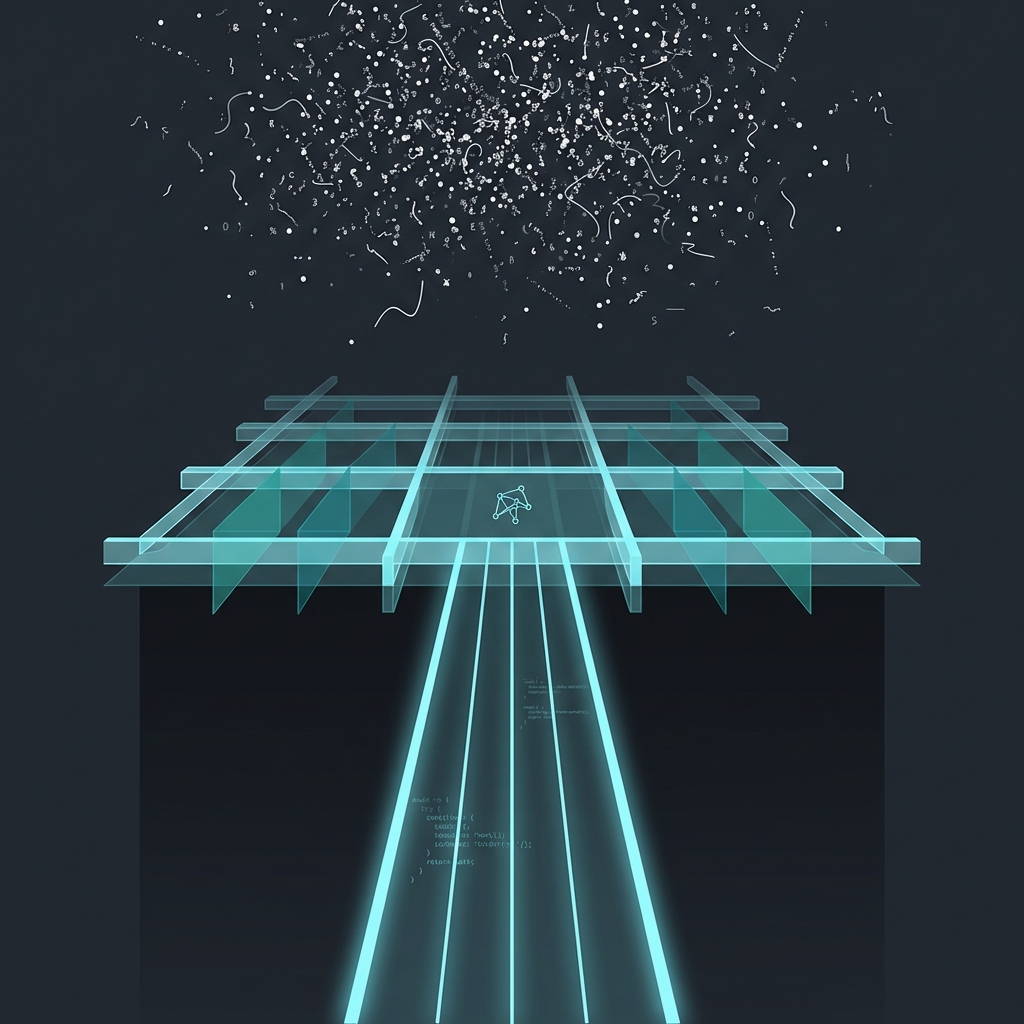
The fix isn't another tool in the stack. It's a layer that sits above them—synthesizing signal, structuring intent, and pushing context to every downstream agent.
Maintaining Startup Magic
This is Balfour's most interesting point.
"AI can potentially maintain the magic of early stage startups you lose over time… super tight feedback loops between builders and customers."
He describes how companies lose this by adding specialized roles—researchers, analysts, ops—that create layers between the builders and the signal.
We'd reframe it differently:
The problem isn't specialization. It's latency.
Feedback used to reach builders directly. Now it travels: Customer → Support → Ticket → PM → Spec → Engineer. Context degrades at every hop.
AI can close that loop. But only if the signal is structured and machine-readable.
That's what the Intent Layer does. Support tickets become friction signals. Friction signals become structured specs. Specs push directly to the agents that build.
The PM doesn't write specs. They review them.
The "How" Question
Balfour ends with a gap:
"There is a large gap between AI promise and reality of implementing all this change in product teams."
He describes the what. Here's the how:
| Balfour's Shift | How It Happens |
|---|---|
| Idea → Prototype | Intent Specs replace ambiguous docs |
| Explore many paths | Shared Intent prevents path divergence |
| Unify fragmented stacks | Intent Layer as integration point |
| Maintain startup magic | Friction → Intent → Ship pipeline |
The Vibe Coding era generated unprecedented velocity. It also generated unprecedented chaos.
The next era requires intent engineering. Machine-readable. Traceable. Shared.
Balfour identified the shift. The next step is building the infrastructure that makes it real—not more prototypes, but shared definitions of success that every agent and every team member can execute against.
Don't Just Write Code. Define Intent.
Turn user friction into structured Intent Specs that drive your AI agents.
Get Started for Free