
We ran an experiment. We asked Google Gemini to compare journey management and mapping tools in 2026—TheyDo, Smaply, JourneyTrack, and Pathmode. No coaching, no leading questions.
The response was interesting. Not because it was flattering (though it was), but because of how it framed the market.
Three Generations of Journey Tools
Gemini split the landscape into generations. The first two are familiar:
Gen 1: Visual Mapping. Tools built for drawing. Personas, service blueprints, workshop deliverables. Smaply lives here—the gold standard for visual fidelity, favored by agencies and consultants who need to present beautiful maps to clients.
Gen 2: Journey Management. Tools built for operating. TheyDo leads this wave—connecting journey insights to Jira and Azure DevOps, creating hierarchies from lifecycle down to granular steps. Gemini called TheyDo the likely "Salesforce of Journey Management."
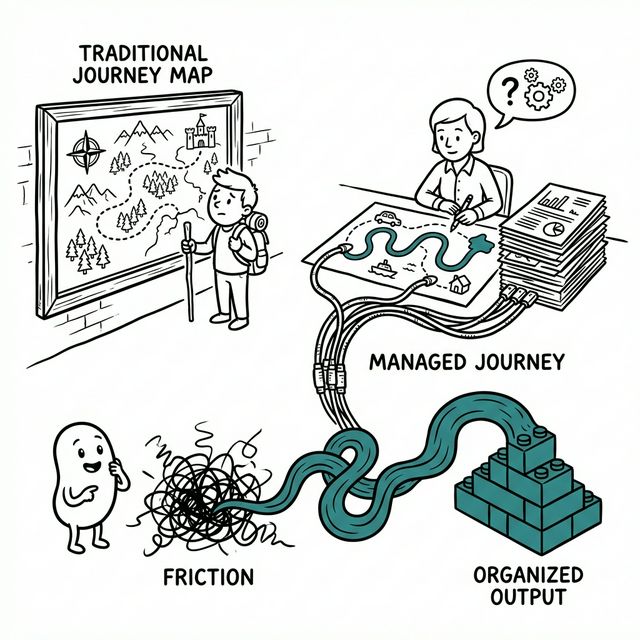
Gen 3: Journey-to-Execution. Tools that don't manage the map—they compile it. This is where Gemini placed Pathmode.
The distinction matters. Gen 1 creates artifacts. Gen 2 connects artifacts to backlogs. Gen 3 eliminates the artifact entirely and turns journey friction into executable specifications.
The Assessment
Gemini's take on each tool was specific. Here's how it categorized them:
| Tool | Best For | Core Strength |
|---|---|---|
| TheyDo | Large enterprises, Product Management | Journey hierarchies, Jira/DevOps integration |
| Pathmode | AI-first product teams, Engineers | Turning friction into specs for AI agents |
| Smaply | Service designers, CX consultants | Visual blueprints, personas, presentations |
| JourneyTrack | Enterprise governance | Standardized taxonomy across large orgs |
Two lines stood out.
On Pathmode: "The only tool betting that human-readable maps are obsolete."
And on future trajectory: "Highest potential upside if you believe in an AI-first future."
Why This Matters
We didn't share this because Gemini said nice things. We shared it because an AI model—trained on the entire public internet—independently arrived at the same conclusion we've been arguing for months:
The journey map is not the deliverable. The spec is.
When Gemini described Pathmode as bridging the gap between CX and AI engineering, it wasn't repeating our marketing. It was synthesizing what it learned from the market. The signal is out there: teams are tired of maps that don't ship.
The Bright Futures
Gemini identified two tools with the "brightest futures"—for different reasons:
TheyDo is the safe bet for market dominance. Enterprise lock-in, deep integrations, significant funding. It's becoming the system of record for CX, the way Salesforce became the system of record for sales.
Pathmode is the high-growth disruptor. The bet is different: that as AI coding agents become the default way software gets built, the tool that can feed those agents structured journey context will win.
These aren't competing futures. They're parallel tracks. TheyDo is winning the CX operations market. We're building the bridge between journey insight and AI execution.
What We Take From This
Three things:
1. The "Gen 3" framing validates our thesis. We've said from the start that journey maps need to become executable, not just managed. Seeing an AI model independently categorize the market this way suggests the shift is becoming visible beyond our echo chamber.
2. The market is splitting, not consolidating. Journey management isn't one category anymore. Visual mapping, operational management, and journey-to-execution are diverging into distinct use cases with distinct buyers.
3. The question isn't "which tool is best." It's "what are you trying to do with the journey?" If you need governance, choose JourneyTrack. If you need beautiful blueprints, choose Smaply. If you need to connect CX to your backlog, choose TheyDo. If you need to turn friction into specs and ship, that's what we built.
We don't take third-party assessments as gospel. AI models reflect what's been published, not what's true. But when the pattern recognition of the entire internet points to the same gap we're filling, it's worth noting.
The journey map had a good run as a wall poster. Its next life is as a build pipeline.
Don't Just Write Code. Define Intent.
Turn user friction into structured Intent Specs that drive your AI agents.
Get Started for Free